
Inter-company reconciliation involves comparing the ledgers of subsidiary companies with those of the parent company to identify discrepancies. This process helps to make sure that the consolidated financials of a corporate group are accurate, and that intercompany transactions are properly accounted for. For small businesses, the main goal of reconciling your bank statement is to ensure that the recorded balance of your business and the recorded balance of the bank match up.
Applied Intuition closes $300M secondary four months after raising $250M
These miscalculations can also occur on the business’s financial records. Account reconciliations can also help identify bank and credit card errors. Though rare, it’s not unheard of that a bank or credit card company makes an error on your account, perhaps deducting funds for a check that isn’t yours, or charging you for a purchase that you never made. One of the most important things you can do to keep your general ledger accurate is to perform a bank reconciliation monthly.
Required Information to Create a Bank Reconciliation Statement
It’s vital to cross-check records, verify with the other party if needed and correct the duplicates. Customer reconciliation compares your financial records with those of your customers to check that they both tally. This process lets you track incoming cash and outstanding payments and may involve adjusting the company’s accounting records to reflect the correct amount owed by the customer. A vendor reconciliation involves reviewing your accounts payable records to ensure they match vendor and supplier statements. This step ensures you’ve paid the correct amount and aren’t missing any payments. It also helps to identify any discrepancies between their records and yours that you need to resolve.
Order To Cash
This type of reconciliation helps businesses maintain accurate financial records and identify any discrepancies, so they always know who owes them money and who they need to pay. In doing so, the business can effectively manage cash flow, ensuring timely payment of bills, and collection of receivables. The process of account reconciliation provides businesses with the opportunity to notify the bank what is meant by nonoperating expenses and losses (or other external source of statements) of errors and have them corrected. This is critical because any discrepancies left unaddressed could distort a company’s understanding of its financial health. Income from variable sources like interest and investment may be difficult to predict. As such, exact amounts may not be accurately included on financial statements before the reconciliation process.
Business Specific Reconciliation
However, these sort of arrangements needs to be revisited, evaluated, and acted upon if required. Including this new investment, Fragment raised a total of $10.8 million since June 2021. Ask any engineer tasked with tracking customer balances, what how to use an llc for vehicle ownership the experience is like, and you’ll get a deep sigh that says, ledgering is the bane of existence. Some comments from Instagram users have speculated that Sheikha Mahra’s account could have been hacked.
- Account reconciliation is a process that involves identifying discrepancies between business ledgers and outside source documents.
- By practicing regular reconciliation, businesses protect their integrity, demonstrating a commitment to accuracy and transparency.
- In this way, the number of items that cause the difference between the passbook and the cash book balance gets reduced.
Prepaid assets
The analytics review method reconciles the accounts using estimates of historical account activity level. It involves estimating the actual amount that should be in the account based on the previous account activity levels or other metrics. The process is used to find out if the discrepancy is due to a balance sheet error or theft. Documentation review is the most commonly used account reconciliation method. It involves calling up the account detail in the statements and reviewing the appropriateness of each transaction.
This schedule of activity should support the general ledger ending balance for each account. Even the most meticulous business owners encounter reconciliation errors occasionally. Such discrepancies could arise from overlooked receipts, misplaced dates or duplicate records. When account reconciliation is complete, document the process and any adjustments.
Furthermore, it gets easier to ascertain the correct amount of balance at the bank in the balance sheet. Bank reconciliation is the process of matching the bank balances reflected in the cash book of a business with the balances reflected in the bank statement of the business in a given period. Such a process determines the differences between the balances as per the cash book and bank passbook.
The process of reconciliation confirms that the amount leaving the account is spent properly and that the two are balanced at the end of the accounting period. These different types of reconciliation are important for maintaining accurate financial records, detecting errors and fraud, and ensuring the reliability of the accounting system. They give organisations a clear and accurate picture of their financial position, which enables them to make informed business decisions.
When your business issues a cheque to its suppliers or creditors, such amounts are immediately recorded on the credit side of your cash book. When you compare the balance of your cash book with the balance showcased by your bank passbook, there is often a difference. Therefore, an overdraft balance is treated as a negative figure on the bank reconciliation statement. It’s also important to ensure you maintain detailed records of the three-way reconciliation accounting process. All trust transactions in the internal ledger should be accurately recorded and should align with transactions in the individual client ledgers. How often should you conduct the three-way reconciliation accounting process?
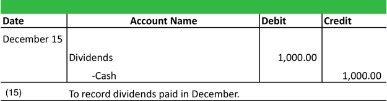
Whether you have high transaction volumes or complex transaction scenarios, Stripe’s reconciliation solution offers scalable and reliable support for your financial operations. To fix reconciliation discrepancies in the reconciliation process, we need to use journal entries. They record financial transactions present value index monetary definition of present value index in your accounting books, showing the date, the accounts affected, and the amounts to be debited and credited. Bank fees or charges not recorded in your accounting software won’t match up and create discrepancies. Keep an eye on credit card statements as well watch out for any unnoticed bank charges.
In the end, the difference between QuickBooks and your bank accounts should be US $0.00, although processing payments can sometimes cause a small gap. Once the adjusted balance of the cash book is worked out, then the bank reconciliation statement can be prepared. In this way, the number of items that cause the difference between the passbook and the cash book balance gets reduced.
Account reconciliation is considered part of the full accounting cycle process. Most importantly, reconciling your bank statements helps you catch fraud before it’s too late. It’s important to keep in mind that consumers have more protections under federal law in terms of their bank accounts than businesses. So it is especially important for businesses to detect any fraudulent or suspicious activity early on—they cannot always count on the bank to cover fraud or errors in their account. Due to these reasons, it’s important to periodically reconcile your bank statements. Account reconciliation is the process of cross-checking a company’s financial records with external documents, such as bank statements.
Accounts like prepaid expenses, accrued revenues, accrued liabilities, and some receivables are reconciled by verifying the items that make up the balance. This may be done by comparing a spreadsheet calculation to the balance in the general ledger account. However, you typically only have a limited period, such as 30 days from the statement date, to catch and request correction of errors. The frequency of your reconciliation process can be determined by the size and type of business.
Perhaps the Excel spreadsheet you used to calculate the journal entry has a formula error. Some or all of these will happen at some point in the life of every business. But if you don’t reconcile your accounts regularly, you might not catch mistakes as they arise. Whatever method you prefer, it’s important to keep solid records of every transaction to reconcile your bank account properly. The reconciliation statement allows the accountant to catch these errors each month. The company can now take steps to rectify the mistakes and balance its statements.
For the current year, the company estimates that annual revenue will be $100 million, based on its historical account activity. The company’s current revenue is $9 million, which is way too low compared to the company’s projection. For example, a company may review its receipts to identify any discrepancies. While scrutinizing the records, the company finds that the rental expenses for its premises were double-charged.

Apasionada de la lectura.